
Start here · Thawing, temperatures, resting
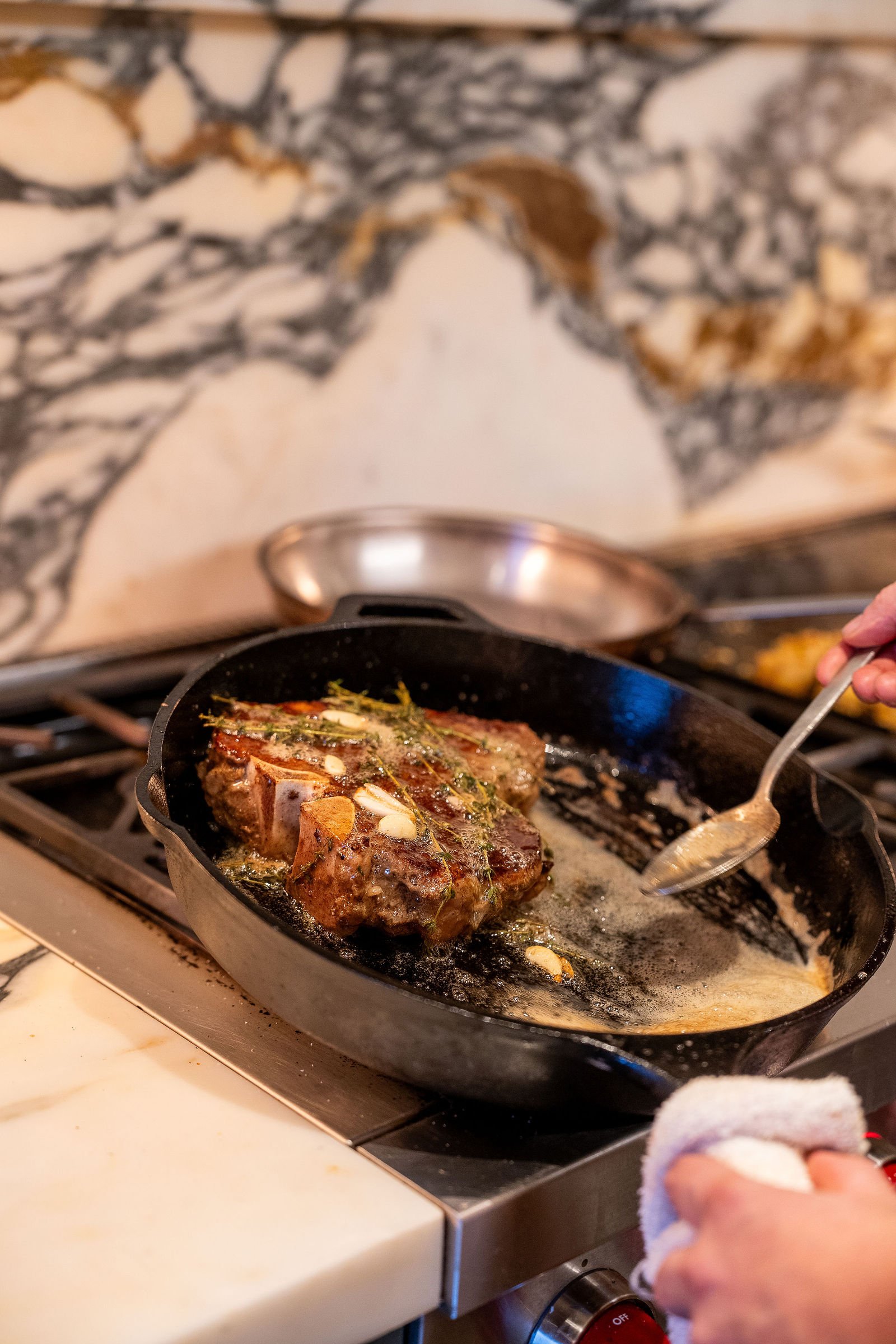
Everything you need to know before cooking any of our steaks.
Thaw it slowly. Move steaks from the freezer to the fridge 24 hours before you cook, still in their vacuum-sealed pack. In a hurry? Put the sealed pack in a bowl of cold water for 30–60 minutes, changing the water every 30 minutes. Never use the microwave or hot water.
Take the chill off. Pull steaks out of the fridge 30–45 minutes before cooking. Pat them completely dry with paper towels, because a dry surface browns and a wet one steams.
Season generously. Kosher salt and coarse black pepper on every side, just before cooking (or salt up to a day ahead and leave uncovered in the fridge for an even better crust).
Cook to temperature, not time. An instant-read thermometer is the best tool in your kitchen. Pull the steak off the heat about 5°F below your target; it keeps cooking as it rests.
| Doneness | Pull it at | After resting | What it looks like |
|---|---|---|---|
| Rare | 120°F | 125°F | Cool red center |
| Medium-rare | 125–130°F | 130–135°F | Warm red center (our pick) |
| Medium | 135°F | 140°F | Warm pink center |
| Medium-well | 145°F | 150°F | Slightly pink |
| Well done | 155°F | 160°F | No pink |
Let it rest. Rest steaks on a cutting board for 5–10 minutes (about half the cook time for thick cuts). The juices settle back into the meat instead of onto your plate.
Slice against the grain. Look for the lines running through the meat and cut across them, not along them. Shorter fibers mean a more tender bite.
Finish with butter. A spoonful of our compound butter on a hot, resting steak is the easiest way to make it taste like a steakhouse.